
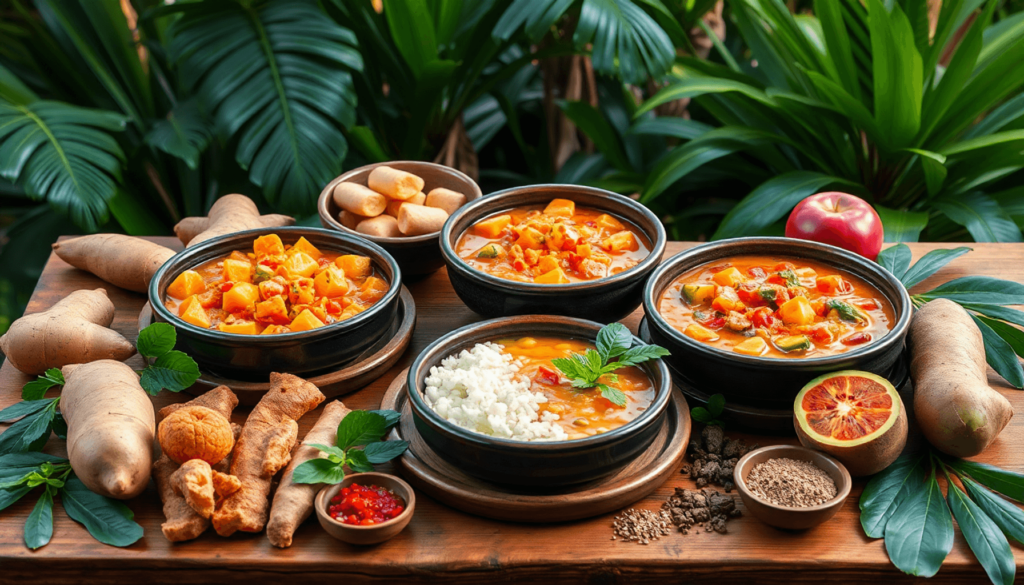
Dominican cuisine is a vibrant mix of different cooking styles influenced by the island’s rich history. It combines elements from the Taíno, Spanish, and African cultures, each of which has had a significant impact on local ingredients, flavors, and cooking methods.
In this article, you will discover:
Join us as we explore the delicious world of Caribbean cuisines and delve into the heart of Dominican cuisine.
Dominican cuisine is a blend of various cultures, each bringing its own flavors and cooking methods.
The Taíno people, the island’s original inhabitants, laid the groundwork for Dominican cooking. They introduced key ingredients like cassava, sweet potatoes, and tropical fruits such as guava and papaya. Their farming practices also influenced local agriculture and food customs.
When Spanish colonizers arrived in the late 15th century, they significantly impacted the culinary scene. They brought new cooking techniques like frying and stewing, as well as important spices such as cumin and oregano. These elements blended with indigenous practices, resulting in a distinct combination of flavors.
The forced migration of Africans during the transatlantic slave trade added another dimension to Dominican cuisine. African cooking methods, including frying and stewing, became widely used. Dishes like mofongo exemplify this influence through their incorporation of fried plantains mixed with pork cracklings, showcasing a fusion of African ingredients and techniques.
This rich historical background highlights the intricate nature of Dominican cuisine, revealing its connections to indigenous, European, and African traditions.
Dominican cuisine showcases a variety of staple ingredients that form the backbone of many traditional dishes. Key components include:
The Taíno legacy significantly influences Dominican cooking, particularly through tropical fruits and root vegetables. Staples such as yuca (cassava), taro, and sweet potatoes are not only nutritious but also integral to traditional recipes. These ingredients contribute unique flavors and textures that define the cuisine.
Spanish colonization introduced a variety of meats such as chicken, beef, and pork. These proteins were adapted into local dishes, blending with indigenous ingredients to create rich culinary traditions. The combination of these elements reflects a fusion of cultures, making Dominican cooking both diverse and flavorful.
This rich tapestry of ingredients is essential for understanding the depth and complexity of Dominican culinary practices. Each ingredient plays a role in shaping the identity of the cuisine.
Sancocho is a beloved dish that encapsulates the essence of Dominican cuisine. This hearty stew is traditionally made with seven types of meat, which can include chicken, pork, beef, goat, and even fish. The rich combination of meats is complemented by an array of root vegetables such as yuca, potatoes, and plantains.
Different regions in the Dominican Republic may put their unique spin on Sancocho. For instance, on the northern coast, seafood versions might be more prevalent, while in the mountainous areas, you may find additional tubers like ñame (yam) included.
Sancocho is not just a meal; it’s a cultural symbol often served during family gatherings and special occasions. Its preparation brings people together, reflecting the communal spirit of Dominican life. Many families have their special recipes passed down through generations, making it a source of pride and tradition.
This dish exemplifies the fusion of flavors that characterize Caribbean cuisines, particularly those influenced by indigenous Taíno ingredients and Spanish cooking methods. Enjoying Sancocho provides a culinary experience steeped in history and community connection in the Dominican Republic.
La Bandera Dominicana is a culinary staple and often regarded as the national dish of the Dominican Republic. Its composition typically includes:
This dish is not just food; it represents the heart of Dominican culture and daily life. Served with slices of avocado and sometimes accompanied by Tostones, its presence at every table highlights its significance during family meals and celebrations.
La Bandera Dominicana is a symbol of unity, bringing families together to share stories and laughter. It is commonly prepared for lunch, making it an ideal choice for gatherings or special occasions. When exploring Dominican cuisine, savoring La Bandera alongside other must-try dishes like Sancocho, Mangú, Mofongo, and Tostones creates a vibrant culinary experience that reflects the nation’s rich heritage.
Mangú is a beloved dish in Dominican cuisine, traditionally served as a hearty breakfast option. This simple yet flavorful meal consists of mashed green plantains, which are boiled and then blended until smooth. Key elements of preparation include:
Culturally, Mangú holds a special place in Dominican households. It embodies comfort and nourishment, often enjoyed during family gatherings or as a satisfying start to the day. Its versatility allows it to be paired with various side dishes like Sancocho, La Bandera Dominicana, or Mofongo. For those exploring Caribbean cuisines, Mangú is not only a staple but also an essential experience that captures the essence of Dominican breakfast traditions.
Mofongo is one of the most beloved dishes in Dominican cuisine. This delightful dish is made from mashed fried plantains, which are mixed with garlic and chicharrón (pork cracklings) to create a rich, savory flavor.
Mofongo is often enjoyed alongside other must-try dishes like Sancocho, La Bandera Dominicana, Mangú, and Tostones. Each bite of mofongo encapsulates the vibrant culinary heritage of the Dominican Republic, making it a staple that reflects the island’s diverse influences.
Tostones are a beloved staple in Dominican cuisine, celebrated for their delightful crunch and versatility. Made from green plantains, the preparation involves several key steps:
These crispy bites can be served as a side dish or snack, often accompanied by garlic sauce or a tangy dipping sauce. Their popularity extends beyond Dominican tables, making them a common feature in various Caribbean cuisines alongside iconic dishes like Sancocho, La Bandera Dominicana, Mangú, and Mofongo. Tostones embody the vibrant flavors of Dominican cooking, providing a satisfying contrast to many meals.
Dominican desserts and beverages are an important part of the island’s food culture, showcasing its diverse heritage. Here are some key highlights:
Each of these elements adds to the rich tapestry of Caribbean Cuisines:: Dominican.
No results available